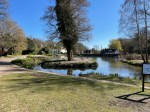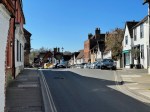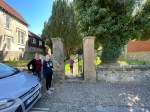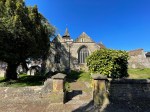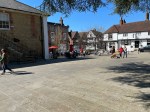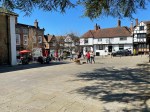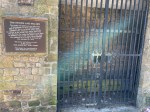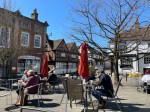
Good thing a picture is worth 1,000 words…cause I got nothing to say.

Last month, as the weather started to warm, we went on another of our Treasure Trails explorations. Basically, these are scavenger hunts where you follow directions and clues around a town in order to solve a puzzle. We’ve done about half a dozen now and really enjoy them. For £10 ($13 USD), they’re pretty cheap entertainment for a family of 4 and take us to towns we’d never really consider going. For April, we went to the West Sussex town of Midhurst.

The reason for this post’s title is that I really don’t have all that much to say about it. I mean, Midhurst is a pretty town. The people were among the most friendly we’ve encountered in England. But I just can’t find much that really happened in this town. Alec Guinness (who played the original Obi-Wan in Star Wars) died in the hospital there. That’s about the most exciting thing.

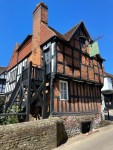
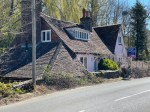
So, for this post, just enjoy the pictures, folks. (My favourite was the town stocks.) My in-laws are coming to visit in a few weeks, so I’m sure I’ll have plenty to say again soon.

The Other Sister

Last month, I wrote about a visit we made to St. Catherine’s Hill, a church ruin with a spectacular view over Guildford. In the blog post, I mentioned a local legend about St. Catherine’s and it’s sister church, St. Martha’s, being built by two giantess sisters who “tossed a hammer back and forth between each hill as needed”. A few weeks later, we decided to go visit the church of the “other sister”.

 The blue dot is St. Catherine’s (last month’s visit), the red dot is St. Martha’s.

St. Martha’s is still an active parish church within the Church of England, although it is currently closed due to Covid. Despite being active, the church is inaccessible by car. There are actually two car parks, each a 10 minute walk (in opposite directions). It’s not a difficult hike, but I can’t envision many elderly parishioners walking up it every week for church. Perhaps they use golf carts or something on Sunday mornings.

The church as you approach from the west.

The existing church is relatively new, built circa 1850 to replace a crumbling 12th century building. We couldn’t see the inside, but the outside is gorgeous.

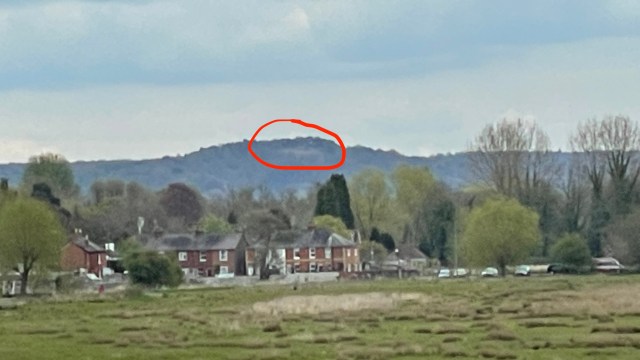
The real draw, however, is the view. St. Martha’s is actually (just) visible from my office window at the church. IMG_1684.jpg

Hard to see in this pic, but that clearing is the church.

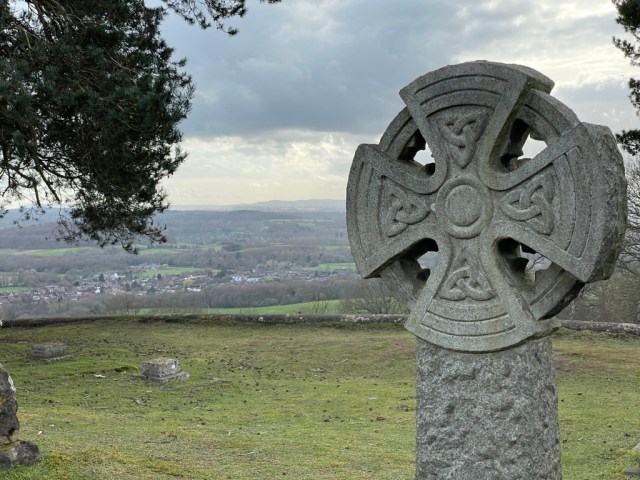
From the top of the hill you can supposedly see into 8 counties, although I can’t find that reference now to back that up. I do know you can see all the way back to Godalming in the west/southwest and, on a clear day, they say you can see London to the northeast. It feels like you can see forever.

In other news, lockdown restrictions continue to ease on schedule in the U.K., so we’re already planning the places we’re going to see this Spring and Summer. Stay tuned for most pics and posts. Finally, here’s my favourite picture I took from the top of St. Martha’s Hill.

FD34CE46-2550-47FA-9761-ACDD303C40B6_1_105_c

The Long Road Out

As my friends in the States may or may not be aware of, England had a full blown “second wave” of Covid starting in December. The rate of infections had started to climb slightly after schools started back up in September. In November, we had a kind of “circuit breaker” lockdown, where shops and restaurants were closed, but schools were still open. Everything opened back up for December, and I think that, looking back, most people would admit that was a mistake. Between the shops being crowded and people gathering together for Christmas celebrations, January saw cases, hospitalisations, and deaths peaking well above what they were at the beginning of the pandemic last year. Hospitals in particular were hard hit, with nearly double the amount of last Spring’s peak.

Vaccinations started in December, and I have to admit, for all the criticisms we had of the governments handling of the pandemic, the vaccination rollout is one point where they got it “spot on”, as they say over here. After 3 months, over half of the adult population has been vaccinated and the government has published a plan to let us out of lockdown. I won’t reiterate that plan here, as it’s very boring, but you can read about it on the government’s website, if you’re so inclined.

In the meantime, the weather warming up, and drying out (somewhat) has allowed and inspired us to explore some of the outdoor sights around Godalming. The other day, we decided to check out a local ruin that had been catching our attention.

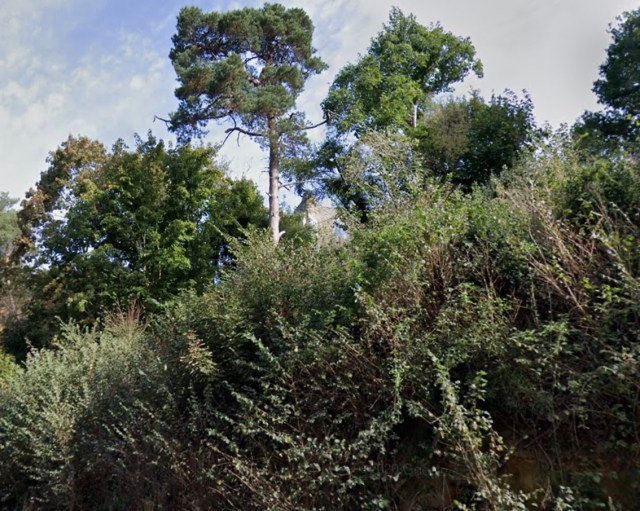
Every time we’ve driven into Guildford, we’ve noticed the very obvious ruins of a church atop a very tall hill just south of the city. However, there was no sign or other indication whether or not this was “public property”, so we just decided there was no harm in trying. The below is not my picture (I borrowed it from Google Maps, but you can see the ruins through the trees. When the leaves began to fall, it was even more compelling.

Screenshot 2021-03-22 at 14.53.37

On Sunday afternoon, despite an overcast sky, we decided to park nearby and walk up the hill. The elevation is about 200 feet, with an incline that’s not difficult, but not terribly welcoming either. Reaching the top is well worth it, though, as the view is spectacular, even on a cloudy day.

450C1448-377F-4682-9840-6B5F8D48F8AE_1_201_a

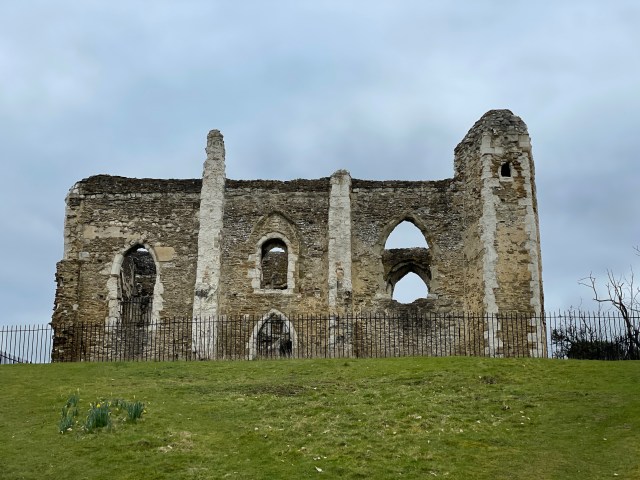
For me, though, the big draw was the ruins of the chapel.

IMG_1460

It was built between 1301 and 1329, although a Wey River blog that I found references an 1868 work that presents a much more fanciful origin for the church. According to a J.B. Dashwood, both this church and the nearby St. Martha’s (again, situated atop a hill) were built by two sisters who gave their names to the respective hills and chapels. According to Mr. Dashwood, the sisters were “of the giant race” and built the chapels by hand, using only a hammer that they tossed back and forth from one hill to the other as it was needed.

Another legend regarding the hill comes from the eastern side, which we couldn’t access due to a building project, where the hill meets the River Wey (the river that runs through Godalming). The base of this hill, where it’s “golden sands” meet the river is said to be the origin of Guildford’s name. The “guilded ford” where people could safely cross the river. I find this story as doubtful as the one about the giants, but it’s a neat story nonetheless.

St_Catherine's_Hill,_Guildford_-_geograph.org.uk_-_287641.jpg
The “golden sands” at the base of the hill. Photo by David Kemp, taken from Wikipedia.

In more verifiable history, the Guildford to Portsmouth railroad line runs directly under the hill, and supposedly you can feel the hill shake if a train passes underneath. We apparently were not that lucky, though. Last year, while working on the tunnel, railroad workers discovered several niches that are thought to be part of a medieval shire dating back to the 14th century.

It was a great little excursion about 5 minutes from home. As lockdown progresses, I’ll hopefully have many more such posts to share.


Lessons Learned

When we arrived in England at the end of 2018, the idea was for this to be a two-year experiment with the option to extend. The beginning of December marked the end of that two year period, and although we’ve obviously decided to stick around for a while, I thought it might be helpful to look back at the original experiment and see how things are going.

Kyla and I of two minds in how well things got started. She looks back on that first chaotic month with nostalgia…..remembering it still makes me sick to my stomach. The flight to London, train trip to Manchester for classes, staying in a dreary AirBNB, living in a hotel…..not experiences I would want to repeat. Nor would I want to repeat the first two months of being without a job. I know that I’ve been extremely blessed to be in a fairly “recession-proof” career. I mean, in the United Methodist Church, I was literally guaranteed a job. Stepping out of that into the congregational system was scary enough, but to move to a country where my credentials counted for nothing? What was I thinking? Sitting around the house every day, watching the credit card debt mount was terrifying. I can admit now that I sank into pretty deep depression starting then. Depression that lasted quite some time, if I’m being completely honest.

Getting a job at Hemmersbach helped a bit. While I’ve been clear about the fact that it wasn’t my calling, I did make some very good friends, without whom I probably wouldn’t have made it through (you know who you are. I miss you). The real salvation for me, however, came through our church. As ministers, I think we tend to leave a bit of ourselves at every church we’ve been at, but I have to say that London Street URC in Basingstoke became my touchstone for the first 18 months we were in England. Weekdays kind of fade into oblivion, but I can still remember nearly every Sunday we were in the church. The minister, the leadership, the members….we were instantly valued and loved and for the first time it wasn’t because they “had” to because I was the minister. I will forever be grateful to London Street and its people.

In contrast to my slow start in England, Kyla was instantly at home here. She embraced the challenges of learning a completely new approach to nursing. Even though she admits that she likes her job a bit more in the States, she happily worked 12 hour shifts and then did an hour bus and walk home, because she was in a country she loved and was experiencing new things every day.

As for the girls….well, to be honest, they barely acted as if there was any difference. There was never a bit of complaining about learning a new school system, or having to make new friends, or living in a house half the size they were used to, or even leaving everyone and everything they knew. There were a few tearful nights missing grandparents, but they honestly adapted so much better than I did myself.

For me, things got better after the first year. Twelve months after arriving, the United Reformed Church held interviews and I was approved for ministry. After that, things moved fast. Even with the pandemic, and lockdown, starting a few months later, the moderator in the URC made sure that things were always moving forward in getting me connected with a church call. Although I got more comfortable at Hemmersbach, and deepened by friendships there, I still wasn’t cut out to be chained to a desk all day long.

Which brings me to the past three months. I have to admit that starting a new ministry in the midst of a pandemic was not the brightest idea I’ve ever had. I’ve yet to meet 1/3 of my parishioners, and of those I have met, the interactions have largely been…superficial? cursory? Don’t get me wrong, the people of Godalming United have been amazing. I just wish I could get to know them better, but without being allowed to do face-to-face visitation, it’s hard to connect. I’ve kind of decided to view myself as an interim for the duration of the pandemic. Not that I’m going anywhere when it’s over, but I’ve accepted the fact that my ministry here can’t really begin until we’ve returned to some semblance of normalcy.

I have no regrets, though. I’m far happier overall than I have been since we left the States. Which ultimately, I think, leads me to the lesson that I’ve learned the most over the past two years: it’s not “the where” for me, but “the what”.

When we left Evansville, I was on the verge of leaving ministry. The suicide of one of my best friends had affected me greatly, and I was ready to just walk away. Every minister goes through these times of doubt, sometimes every few years, but I’m not sure I ever will again. It’s been proven to me beyond a shadow of a doubt that “the what” for me is ministry. It’s the only thing I do well. The only thing I really feel satisfied doing. Although we were very happy in Evansville with the people of St. John’s UCC, I’m not sure I would have made it there, because I think I would have continued to be plagued by doubts and uncertainty over my calling. Stepping away from ministry for a time was one of the most painful experiences of my life, but now I think it was a necessary one to prove to myself who I am and where I belong: behind a pulpit.

While I wouldn’t want to repeat the last two years, I am extremely grateful for what I’ve learned about myself during this time. I feel that now I can really start to enjoy the experiences of this new country that I find myself in. There’s a lot of adventures ahead in the years to come.

A Tour of the Church

Happy ValentineIndependenceLaborHalloween to everyone (hope I didn’t miss any important days in there). Everything just seems to be running together in 2020, doesn’t it?

I had a few minutes this morning, and was wanting to test a new camera, so I took a walk around the church and took some pictures. Thought I’d share them with all of you as a virtual tour.

First up, some various outside shots of the front of the church.

Next, a few views of the River Wey, which runs right by the church.

Then, the back of the church and the view over the Lammas Lands (a common ground that runs along the river).

Now, let’s go inside. First is the entryway. Note the hand-sanitiser stations. Made out of the church’s former pews. (We believe strongly in recycling.)

If you take a right before the stairs, you have a choice (in last picture above). If you veer left, you go into the River Room. The kitchen is beside it, but it’s closed due to Covid restrictions, so no picture of it. I didn’t really get it in either picture, but, as the name implies, there is a beautiful view of the river and Lammas Lands from this room.

If you veer left instead of right, you go into the Hall. This room is primarily rented out to various groups during the week, such as a baby sensory group and a dance class. It also hosts the annual pantomime that the church is famous for in Godalming.

Going back out to the entryway, if you take a left at the stairs, you head into the Sanctuary. (“Behind” the stairs are the bathrooms. I did NOT take pictures of those.)

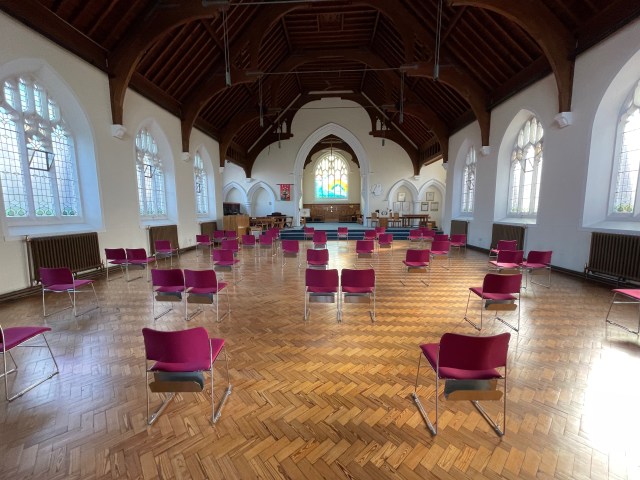
IMG_0703From the back of the church. Chairs appropriately socially-distanced, of course.

IMG_0704View from the pulpit. The “preacher’s eye view”, if you will.

IMG_0705The chancel.

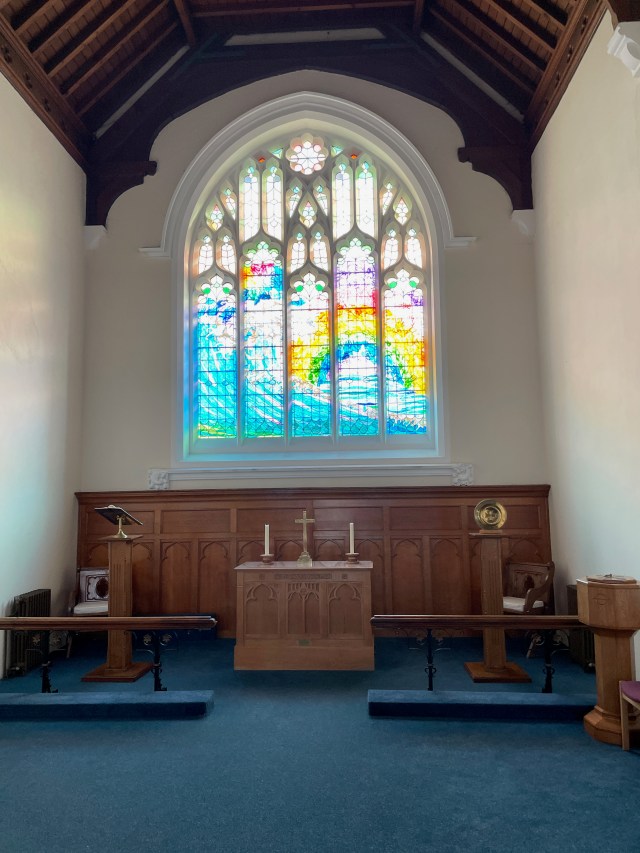
IMG_0706Close-up of our stained glass window. Created by students at a local school.

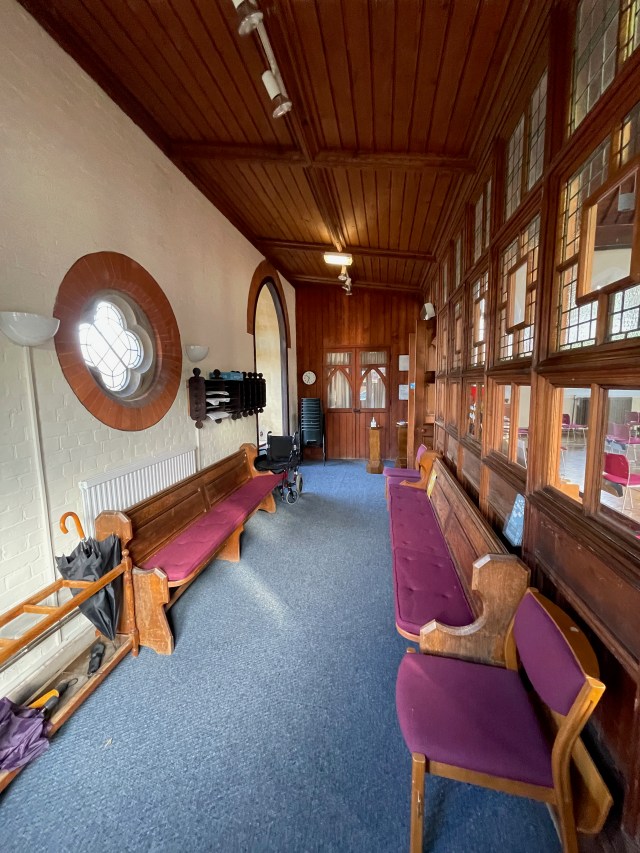
IMG_0702The original vestibule of the church. Being used as an exit in our Covid one-way system.

Off of the chancel area is the copier room. Looks like it was probably used as the church office once upon a time.

IMG_0707

Now, heading upstairs we find a few more rooms.

IMG_0710

Behind me in the perspective of the above pictures is the Lammas Room, which looks out over the Lammas Land. Primarily rented by a martial arts class, a yoga class, and a few other random groups.

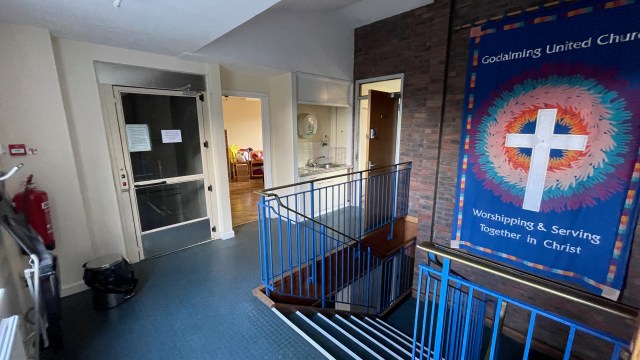
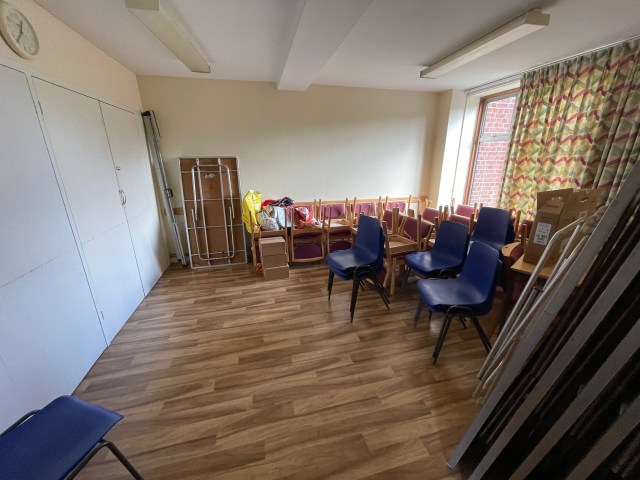
In front of me is a lift with a small Committee room beside it. Since our committees have to socially distance right now, it’s kind of become a storeroom for the moment.

IMG_0711

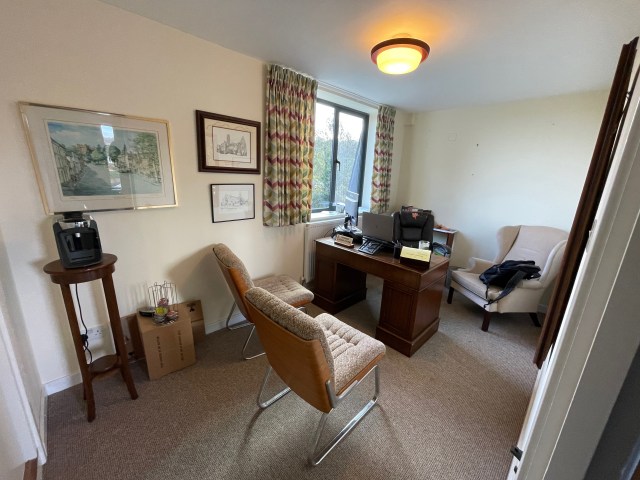
Finally, we have my cozy office. It has a wonderful view and I much prefer working there than from at home.

IMG_0712

Godalming United’s current building is relatively new (at least for England). I believe it was constructed around 1900, with an addition in the 90’s (I’m less sure of that date).

For anyone that’s been curious, we’re settling in well to the community. It’s not particularly easy getting to know a new church during a pandemic, but the church is going out of it’s way to make us feel welcome. I will take longer than usual to get settled, but I have no doubts we’ll get there.

A Educational Rant

we-dont-need-no-education

Beware. Entitled American ranting about first world problems in this post. You have been warned.

As you may remember, it was back around the end of June when we found out for sure that we’d be moving to Godalming. Now, we’d already been warned that the process of moving schools was not a fun one, so we immediately contacted Surrey Schools to find out what the process was. Yet it took until today, two weeks after school started, for us to even find out which schools our children will attend, and it will be another week until they can start.

The past few weeks we’ve discovered that everything around school in this country is ridiculously complicated. Don’t get me wrong. It’s a good education, but the system itself is so convoluted. How so? Sit back my friend, and listen to my story.

Now, for my U.K. audience, the first thing you should know is that in the States, you automatically attend the school nearest your house. Plain and simple. The only exception is that if you seek permission for your child to go elsewhere, and then you have to have a darn good reason.

For my American readers, the first thing you should know is that this isn’t true in the U.K. (or at least England. I guess I can’t speak about Wales, Scotland, or Northern Ireland). Whatever county you live in has a legal obligation to educate your children, but not necessarily at the school closest to you. Each school has a hard limit on the number of kids they can accommodate and after that, you get shunted to the next school in distance, or (in Lizzy’s case), the 3rd closest that’s 25 minutes away. You’re guaranteed a spot in your borough, but in our case that’s an area that’s nearly 20 miles across.

So, back to June. We contacted the school council before we did anything else. We were sent the paperwork needed to get them registered, but were told that we couldn’t be allocated to a school until we physically moved into the house. Now, I will admit that there’s a good reason for this. Like in America, school performance can vary greatly, especially in more affluent areas. So there is a problem with people lying about their address to get their kids into better schools. One of our friends, a retired schoolteacher, tells of his headmaster once giving a tour to four different families. At the end, he sat them all down in his office and said, “Well, we only have one problem. According to the paperwork you’ve all submitted, you all are going to live at the same address and I’m afraid it’s going to get a little snug in there.”

I understand the need for them to make sure that someone isn’t defrauding the system, bu they are incredibly inflexible about it. I had a letter from the church, and was willing to provide any other documentation necessary, to prove that we were, without a doubt, moving into our address in Mid-August. Yet, it didn’t matter what evidence we had, we didn’t go onto the list until we were physically in the house. Making matters worse, our move date in August means we would be considered late applicants, putting us at a lower priority. All of this meaning that our request for the girls to attend the schools in the town we actually live in were slim to none.

Now, we could have stretched the truth about our move-in day. I’d been advised to even outright lie about our move-in date. We played by the rules, however. We sent in the initial paperwork and then notified them the minute we were in the house on 14th August. We found out then that, as things stood then, we could not get in to our local schools, but were on the waiting lists for them. Lizzy was the #2 position on the waiting list for her school and Molly was #1. Great, right? Except that we weren’t told which schools we would be going to in the meantime. The case workers that actually do the allocation take the summer off and don’t start back until the same day the kids do! Even worse, with Covid, they’re working at half-capacity. Also, the economic uncertainty of Covid has caused a large number of parents to pull their kids out of private schools and into the public system. All causing a perfect storm of backlog.

So began an at least twice a week pleasure of calling the school council, waiting on hold a minimum of 45 minutes, only to be told that they hadn’t got to our kids yet and didn’t know when they would. We’ve spent the last two weeks hoping that something would change regarding the school’s attendance (like someone moving as we did) and a spot would open. We hoped in vain. School started two weeks ago today, yet our kids are still sitting at home. Now, if we took our kids out of school for anything but a sick day, we, by law, get fined £60 per day per child. But when we WANT them to go school, the council is suddenly unable to help. We’re trying to assign the girls some school work, but let’s face it, with Kyla and I both working full time (me at a new position and she with a now 45 minute commute), we’re not ideal homeschool parents.

Finally, this morning I received emails that our girls would not be given a place at our local schools and had instead been allocated to those further away. For Molly, it’s honestly not a huge deal. We were hoping she’d attend the primary school in Godalming as she’s already made a couple of friends there and the school is near the church. However the school we’ve been assigned to is honestly equal distance from our house, just in the other direction of the church. Not ideal, but fine.

For Lizzy, though, the 2nd nearest school was also full, meaning we’ve been allocated to a school in a village 10 miles away. Ten miles is not a large distance in American terms, but over here, it’s a much bigger deal. The roads are so narrow and traffic so bad that the school is a minimum 25 minute drive with ideal traffic conditions. Rush/school hour? I’m betting more like 35-40. The good side is that, as it’s more than 3 miles away and was the closest available school, the county has to provide transportation both ways each day. So, I don’t have to sit through the traffic, but Lizzy does.

We accepted the places, of course, we’re desperate by now. We have the right of appeal, but have been told that can take up to 40 business days to process. By that time, the kids will be firmly entrenched in their schools and hopefully making friends. We’ve yanked these poor girls around so much over their lives as preacher’s kids, I don’t want to do any more than necessary. Back before we moved, I promised Lizzy that, as far as I could help it, she wouldn’t have to switch schools (and leave friends) again until she was done with secondary school (high school equivalent).

So, despite our misgivings, we contacted the schools to see how soon we could get them in. For Molly, it’s a relatively simple process. I have to go tomorrow, pick up some paperwork to fill out, and she can start next Monday, possibly sooner. For Lizzy, the complications continue. We have to do placement testing to see which reading and math level she’ll be in and that can’t be done until next Thursday. If all goes smoothly, she can start the next day, 3+ weeks after school starting.

Then comes uniforms. (Oh, yes, I’m not finished yet.) British schools are very big on uniforms. Usually it’s a standard white polo or button down shirt with either grey trousers, skirt or dress. But they each have a jumper (American sweatshirt) or cardigan (American sweater) that’s part of the uniform. It’s a specific colour, with a specific logo, and each school goes with their own uniform supplier, so it’s basically a forced monopoly. And apparently the supplier NEVER stocks enough to actually supply every child that goes to the school. I went in to get Molly’s jumper/cardigan today and were told that they didn’t have any, hoped to have an order coming in by the end of the week, “but the supplier hasn’t been very reliable” and I just have to hope there’s one in her size in that order. Lizzy’s uniforms were ordered online, and I assume they’ll be here before she goes to school, but she has to wear a blazer and tie with the school logo, so her uniform cost £130. If she gets anything on that blazer, she’s dead.

Now, I know that part of moving countries is adapting to new ways of doing things. But I don’t think that I’m being “overly American” here. Everyone we’ve talked to has been appalled by this process. It’s completely and utterly bonkers that it’s been this much trouble to get them into schools in a first-world country.

EDIT: I realised that I didn’t explain the transportation issue very well for the Americans. After all, some of you live in rural areas where 20 miles isn’t THAT much of a stretch for getting to school. HOWEVER, America has school buses. The UK does not. Those familiar yellow beasts are nowhere to be found over here. Some schools have private buses if they transport a large number of kids from further away, but it’s not guaranteed. Although the County has a an obligation to provide free transport for kids farther way, the official guidance says “Your child is expected to travel on the most cost effective service, whether bus, train, coach, taxi or travel allowance, where you have requested this and this is the most cost effective form of transport. This will be decided by Surrey County Council.” So, they may be wanting us to put Lizzy on a public bus at age 12?! I’ll update when I know for sure. Hopefully in another couple of days. 
Going to Godalming – The URC Call Process

Last time, I explained the process that allowed me to be credentialed in the URC. Now, on to the Call Process itself. I imagine this post will only be of interest to my clergy colleagues in America, because the process is quite different here.

It was explained to me that The Process in the the United Reformed Church was a bit of a mix of the Call that Congregational churches in the States are used to and that of the Appointment system in the United Methodist Church. It’s not a perfect explanation, but it’s close enough.

The first step was to fill out a Pastoral Profile, an approximately 5 page document that describes my history, my theology, worship style, family information, etc. That profile was submitted to the Moderators, which are similar to District Superintendents in the United Methodist system. The Moderators meet once a month and part of their discussion is to look at any profiles that have been submitted by clergy and to compare those to profiles that have been submitted by churches that are vacant. They then choose 3-4 church profiles that they feel would be a good match and send them back to the searching pastor.  The pastor then chooses one that he or she would like to pursue, and his profile is sent to that church. If the church agrees that it is could be a good match, we proceed to Step 2. So, step 1 is similar to the Appointment system in the UMC, where the denomination puts the two together, except without the ability to “force” a match.

It’s worth a little aside here to note that the above is the usual process, but there are other options. For instance, if I were to see that a particular church is coming open, and I know that I’m finishing up at my current position, I can request that church’s profile and ask that they be given mine. I also believe that the reverse can happen and a church can request the profile of a particular minister, though I imagine that’s rare.

Also, I should note that I bypassed part of this process. Back in February, before I’d been sent any profiles by the Moderators, I had been asked to fill in a Sunday at Godalming as they were between ministers. I hadn’t intended it to be a job interview, but we instantly clicked with the church and the chair of their Vacancy Committee asked me if I was interested in applying for the post. The Moderators sent me 4 churches, 2 of which I felt were not great matches, 1 that was possible, and 1 that looked appealing. However, the “vacant for 1 year” rule that I mentioned in the last post prevented me from applying to it. Meanwhile Godalming was coming up on the 1 year anniversary of their vacancy, so I asked to be sent their profile when time was up.

Step 2. The Courting Process. When the church agrees that a pastoral profile might be a match, a conversation is arranged with the Vacancy Committee of the church. This is very similar to the United Church of Christ process back in the States. A usual meeting would be face to face, but the COVID restrictions meant that we did a video conference. It was a pretty standard conversation, overseen by a Synod-assigned Moderator, who facilitated the meeting.

Step 3. The Audition. If Step 2 goes well, the Vacancy Committee will take a vote to invite the minister to Preach With a View, which is basically an audition Sunday. Usually (I know, I’m using that word a lot), this is A Big Deal. The pastoral family is invited to the town for the weekend. There’s a dinner on Saturday, tours of the church and parsonage (which they call a Manse), and a Q&A Session where anyone can ask the minister (almost) anything. Sunday morning sees the minister leading worship and preaching, after which he/she goes home and the church holds a congregational meeting where everyone votes on whether or not to call the pastor. The Moderator then notifies the minister of the result of the vote, including the number of “aye” and “nay” votes, and the minister decides whether or not to accept the call.

(My process was a little different, again due to COVID. My Q&A session and my Preach With a View were both done over video, which is less than ideal, but needs must. As Godalming is a joint ministry with the Methodist Church, I also had to have a conversation with their circuit leaders. They didn’t have any say in my hiring, but it was good to get to know them.)

I’ve heard different opinions on what constitutes a “good” percentage of the congregational vote. Many, if not most, churches have a clause in their constitution stating that the vote must be at least a certain percentage for the minister to be called, usually 75-80%. That way they are not inviting trouble by bringing a minister in to a church that was split 51/49 from the very beginning. I’ve been told that some ministers won’t accept a call unless it’s at least 90%, to ensure that they’re going to the right place.

Whatever the number, after the minister accepts the call, arrangements are made between the pastor and the church as to start dates, etc. One thing that is not negotiated is salary. Interestingly, and I think appropriately, every full-time position in the country is paid the same stipend, current at £27,000 ($34,000) plus use of the parsonage. I really like this arrangement as it keeps ministers from competing and church-hopping on the basis of salary.

So, that brings us to where I currently am. Godalming and I have set a start date for September 1st. We’ve seen the manse once and are going back next week to get measurements of rooms and such. I’m currently in the process of lining up a mover for late August.

It’s been a long year and a half, but very soon I’ll be back to doing the only thing I’m good at: pastoring a church.


Getting Credentialed in the United Reformed Church

This week, I announced on Facebook that I’ve accepted a call to Godalming United Church in Godalming, Surrey. Now that I’m at the end of this process, I thought I’d take the opportunity to talk about what all it entailed in moving my credentials from the U.S. to the U.K.

Whenever we arrived in England back at the end of 2018, we planned to do some “church shopping” to decide which denomination and congregation in Basingstoke fit us best. However, as detailed in a post at the time, we hit the jackpot on our first Sunday and London Street URC quickly became our church home. I admit that I chose them for our first Sunday as the United Reformed Church was a “cousin” to our United Church of Christ back home, but it was completely to the credit of London Street’s minister and members that we decided to stay.

I’m very glad we did, for more than the obvious reason. At the time we were leaving the States and coming over here, I was very much lost and adrift in my spiritual life. Primarily I was still hurting over the suicide of one of my closest friends a few months before. I was using the move as an excuse to look elsewhere for how I would spend the rest of my working life. Thankfully, becoming involved with such a wonderful church quickly helped me to realize that the church was still where I belonged.

Back around the end of February 2019, I reached out to the Synod Moderator for our area and asked to meet. She gave the great news that ministers were needed and that transferring my credentials from the UCC (a fellow Congregationalist denomination) was a relatively straight forward process. Unfortunately, it’s a process that only takes place once a year…in November. So, I had about a 9 month wait before I could apply. So, wait I did. Nine more months at Hemmersbach, where I liked the people, but wasn’t particularly suited for the work. I’m just grateful they put up with me.

Finally, November arrived and I submitted my application to the Ministries Committee so that I could be issued a Certificate of Eligibility (I’ll explain all that in a minute). The process itself wasn’t terribly onerous. I had to fill out a 4-5 page application and then be interviewed by the Ministries Committee at Church House in London. I did that on a cold day in mid-December and got the results later that day. This meant that I would, subject to a criminal background and reference checks, be issued the aforementioned Certificate of Eligibility. This certificate essentially serves as my initial credentials in the United Reformed Church, allowing me to “apply” for churches. There are only a couple of stipulations.

First, the Certificate is only good for three years, but it’s only needed for your first church. After you’ve been inducted into your first position, your name is added to the Role of Ministers and the certificate is no longer needed. So, basically you have 3 years to find your first church or it expires.

Secondly, for your first church, you can only be offered churches that have been without a minister for one year. Basically, this is a UK immigration rule, not a URC rule. To protect jobs for natives, any position advertised internationally has to have been open for one year first, to show that no one currently in the UK is qualified and/or interested in the position. (There are exceptions to this where there is a critical shortage of needed workers, such as nurses. That’s how we got into the country so quickly.) This only applies to your first position in an organization, though, so it won’t affect future churches for me as I’ll still be working for the URC, just “transferred” to a different location.

My Certificate of Eligibility was finalized in early January, and then the real search and call process began. I’ll be back, hopefully tomorrow, to share the call process that led me to Godalming.


Hackwood Estate

One good thing about the lockdown has been that we’ve been able to take some nice, long family walks. Last week, we were told about a nice path just south of us called Hackwood Estate.

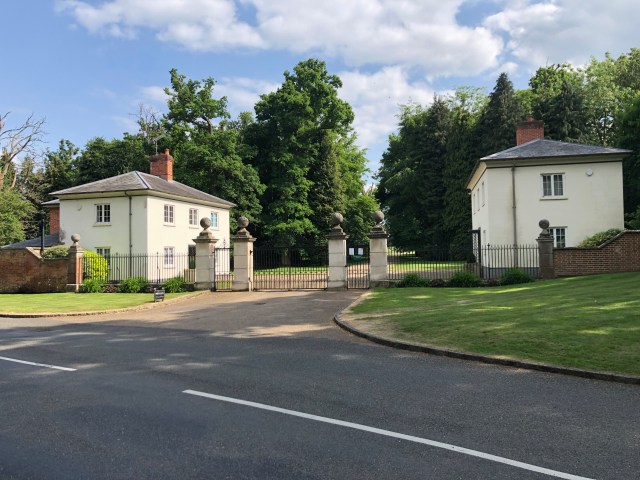
As we were warned, on the approach it does not look like a public path. In fact, it looks very imposing and “stay off my land”.

3E6602F8-9E3C-4164-B2DC-0648F2F85D78

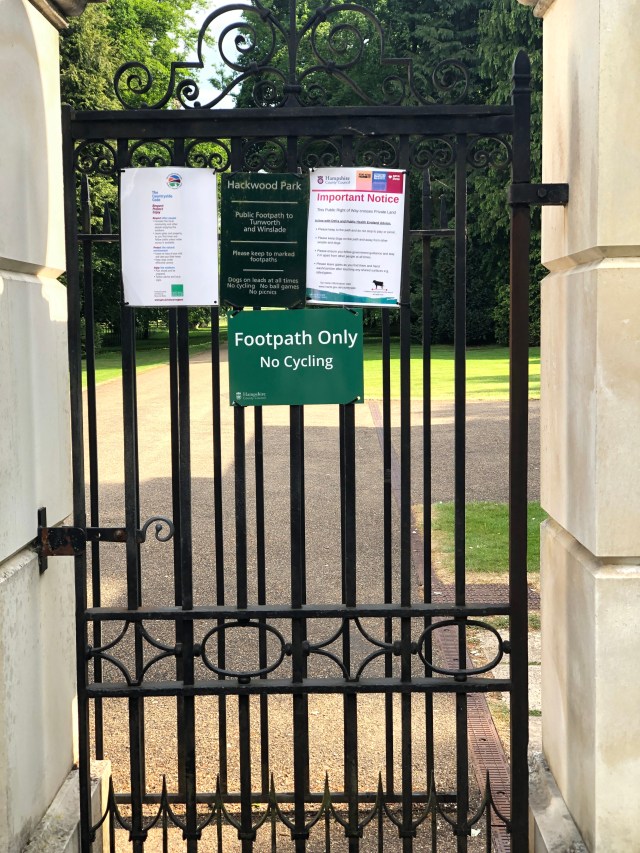
However, there is actually a public footpath that runs through it.

828C9AD1-BE37-431D-B5AD-70F1AB7E0309EBAEEB5C-77B0-4D81-88EB-6F53BC00FABE

Apparently these “public footpaths” are a time-honored tradition in this country. Many of them go back hundreds, if not thousands, of years and are protected by English Common Law. Basically if a path has been used without obstruction or protest for over 20 years, it can be classified as Public Right of Way, and, near as I can tell, is protected from that point forth.  Some of these pathways wander directly through the middle of fields, or in this case, what was a nobleman’s estate.

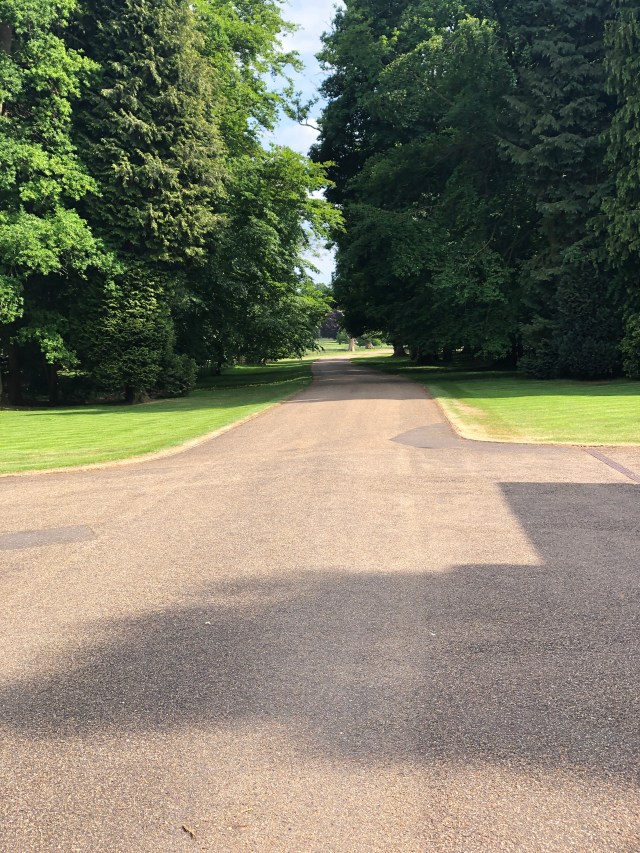
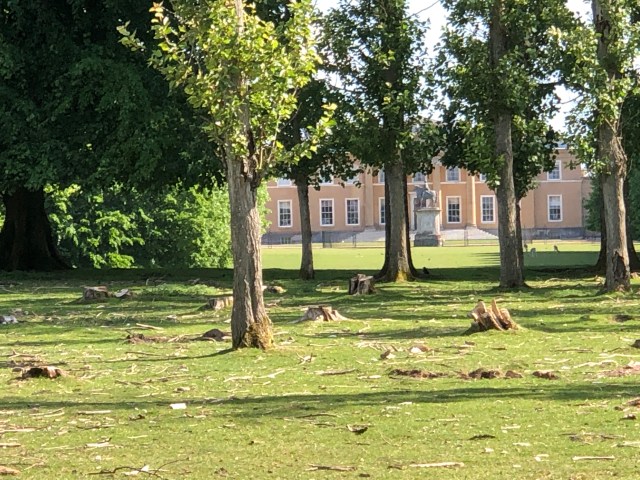
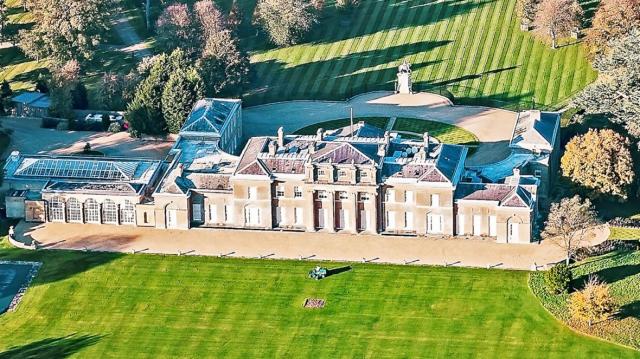
As we wandered down the path, we could see what was obviously a magnificent house a ways off the pathway. This is my terrible picture of it.

97D71CBB-C089-470E-BAD4-609FD16FBDBD

Not the best view, but you can tell it’s not an ordinary cottage. Upon Googling it, we found out that it’s the manor house for Hackwood Park, the land we were walking on. The estate goes back to 1200, with the house pictured being built in the 1680’s. 24 bedrooms, indoor and outdoor pool, tennis court, the whole nine years. It’s believed to be the most expensive estate ever publicly for sale in this country, with a current asking price of £65 million (about $80 million USD).

-methode-times-prod-web-bin-ff92d80a-0b1f-11e6-8c92-602bcdff39ac

Walking further, you can see kept deer roaming the woods outside the house, about 2 dozen of them that we could see.

All only about a 5 minute walk from our house. After a year and a half, this country still manages to surprise us constantly with it’s history and beauty.


If you want to know more about the history of Hackwood, check out the Wikipedia article: https://en.wikipedia.org/wiki/Hackwood_Park

If you’re in the market, well, please invite me to stay after you view the listing here: https://www.christiesrealestate.com/sales/detail/170-l-141-1809180423168654/hackwood-park-eg


Rewind Edition

I’ve been getting a little flack from my wife and my brother about not writing a blog post about his visit. Mainly because the pandemic turned the whole thing in to a debacle and he basically paid a LOT of money for a day in London. Ok, that’s a bit of an exaggeration, but you see my point. I’ve been feeling guilty about the whole thing. As we’re starting to creep out of lockdown, I’m feeling a little better about it, so here we go.

Patrick flew into Heathrow the day after Lizzy’s birthday. What a present, huh? We let him have a day of rest, then, while the girls were in school, Kyla and I took him for a tour of London. We began with a bus tour that hit most of the major sites around the city. We then went for a ride on the London Eye, the giant ferris wheel. It was our first trip, so we got some amazing views of the city.

We’d planned to go to Dublin for the weekend, but the Coronavirus put that city in lockdown a few days before we were due to leave. We began to look around for someplace nearly as exciting, and naturally alighted on…Birmingham. Patrick and I took a train and arrived in the city around noon, walking around city centre and seeing the sites.

We then decided to head to Cardiff, so I could show him one of my favorite places in the world: Cardiff Castle.

Unfortunately, while we were in Cardiff, we learned that the U.S. was about to start putting restrictions on incoming flights. He decided it was best to get back into the States before that happened, so he made arrangements to fly out a day later.

It wasn’t the visit we’d hoped for, but we’re looking forward to him coming back to visit when this is all over.